Myth is more than an ancient story. It is a living language—a way of remembering our relationship with the land, the seasons, the body, and the unseen forces that shape our lives.
Through myth, the earth becomes sacred again. Rivers, mountains, animals, and plants are not merely resources, but teachers, ancestors, and companions. These stories reconnect us with the places we inhabit and remind us that we belong to the living world.
For women, myth can also be a path of remembrance. Beneath stories that have been forgotten, silenced, or rewritten, we encounter the wisdom of our bodies, our intuition, our cycles, and our connection to one another. Myth invites us to recover what we have always carried within us—and to imagine new ways of living rooted in reverence, belonging, and feminine wisdom.
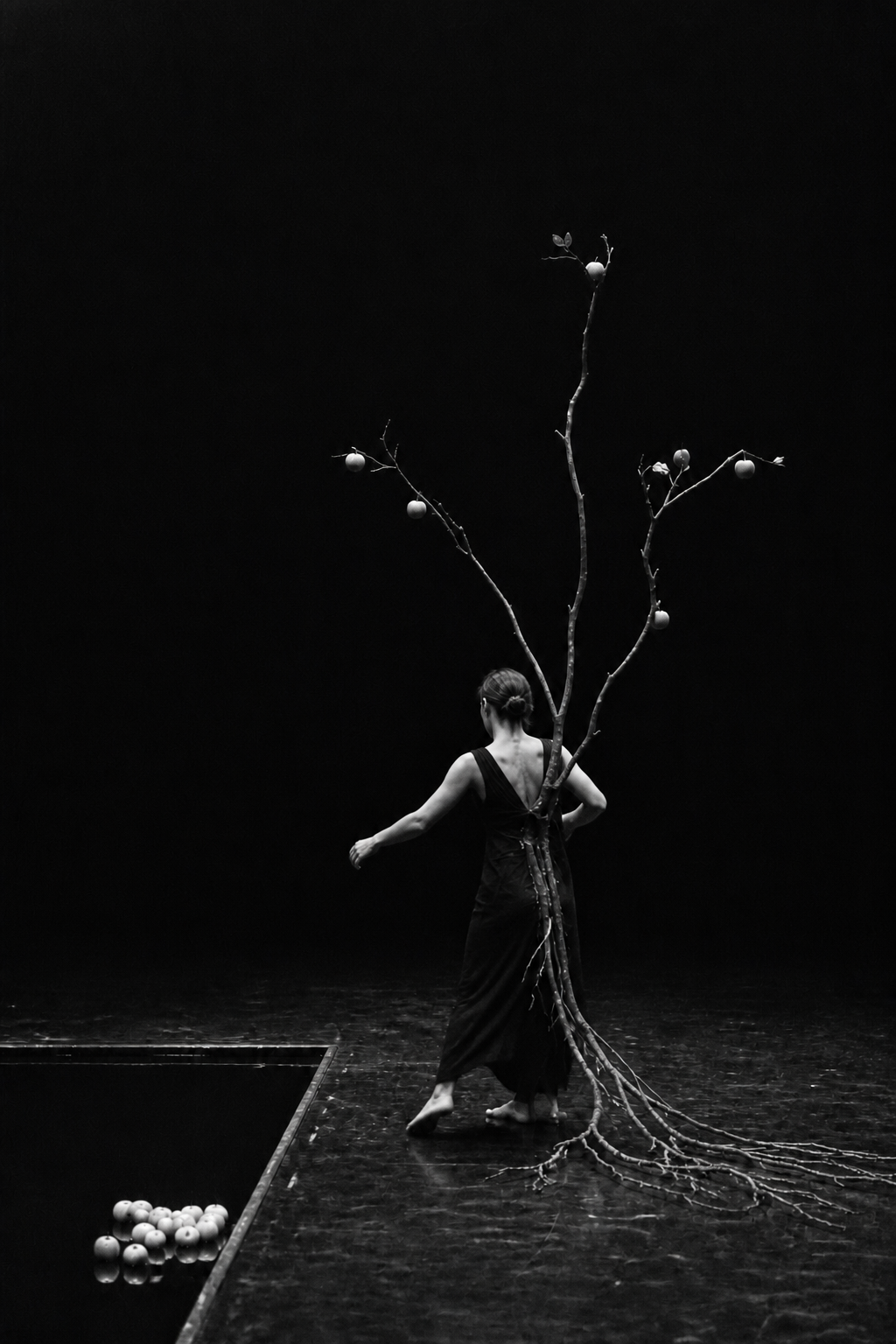
Pomona: The Garden Within
A ritual-based performance inspired by the myth of the Roman goddess of orchards, fruit trees, and cultivated abundance.
Her name comes from poma: the fruits that grow on trees. Unlike the great Olympian figures, Pomona belongs to the intimate labour of cultivation—pruning, grafting, watering, and waiting for fruit to ripen.
In Ovid’s Metamorphoses, Pomona turns away from forests and rivers toward the world she has made: an orchard shaped by seasons, care, and measure. She knows that cultivation is not passive. It asks for the hand that cuts back excess, tends new growth, and protects what is still ripening.
Apples, water, and the marked space of the orchard form the inner landscape. They hold questions of nourishment, transformation, desire, and protection.
Here, the sacred feminine is neither passive nor ornamental. Pomona is a guardian of what is living, ripening, and becoming—a protector of light and beauty.